Category: Health

  • Why you should talk about periods with your daughter (learn how to do it for free!)

    Why you should talk about periods with your daughter (learn how to do it for free!)

    Editor’s Note: Talking to your daughter about her cycle is tricky. To help, we’ve partnered with a website that specializes in helping dads with this exact topic! below is their article and an invitation to a webinar that might be useful.

    Fatherhood is about being present and prepared for every stage of your child’s life. One of the most important roles you can play as a father is being a trusted guide when your daughter gets her first period. Many dads feel uncertain about how to approach the subject of menstruation, or even whether they should bring it up at all.

    Below, we’re sharing valuable tips to help you get started, and on April 8th, you can join us live for even more insights—completely free. Don’t miss the chance to learn from expert and connect with other dads who are navigating this important journey.

    Reserve your spot here: https://www.dadsdaughtersandmenstruation.com/webinar

    (more…)

  • Men’s Mental Health: Fighting Back on Both Fronts – A Father’s Perspective

    Men’s Mental Health: Fighting Back on Both Fronts – A Father’s Perspective

    As a father, I’ve come to understand the weight of responsibility that comes with raising a family. The grind of providing, protecting, and nurturing can be overwhelming at times. Yet, as men, we’re often taught to carry this weight in silence, to “man up” and soldier on. For many of us, this mindset isn’t just unhealthy—it’s dangerous.

    Men’s mental health is a conversation we need to have, and as a father, I feel a responsibility to fight back on both fronts: against the internal stigma we carry and the external barriers that make seeking help difficult. After all, how can we be there for our families if we’re not taking care of ourselves?


    The Internal Battle: Fighting the Stigma

    As men, we’re conditioned from a young age to believe that showing vulnerability is a sign of weakness. We’re told to suppress our emotions, tough it out, and never let the cracks show. As a dad, this narrative became even more ingrained. There’s a constant pressure to be the pillar of strength for your family, to always have the answers, and to never falter.

    But the truth is, fatherhood is tough. It’s emotionally demanding, and some days it feels like there’s no room for my own feelings. I’ve found myself bottling up stress and pretending everything is fine when, inside, it wasn’t.

    Breaking that cycle isn’t easy, but I’ve learned that being vulnerable is actually a strength. Sharing my struggles—whether with my partner, a close friend, or a professional—doesn’t make me less of a man. In fact, it makes me a better father. By being honest about my mental health, I’m setting an example for my kids that it’s okay to talk about feelings and ask for help when you need it.


    The External Battle: Overcoming Barriers

    Even when we acknowledge we’re struggling, seeking help isn’t always straightforward. As a dad, there are so many external pressures that make prioritizing mental health feel impossible. Between work deadlines, school pick-ups, and the endless to-do list at home, finding time for myself often feels like a luxury I can’t afford.

    Then there’s the stigma. Even in today’s world, there’s a lingering perception that men who seek help are somehow “less capable” or “less reliable.” This attitude isn’t just outdated; it’s harmful.

    The truth is, prioritizing my mental health doesn’t just benefit me—it benefits my whole family. When I take time to address my stress, seek therapy, or even just have an open conversation, I’m better equipped to handle the challenges of fatherhood. I’m more patient, more present, and more connected with my kids and my partner.


    The Ripple Effect: Why Men’s Mental Health Matters

    As a dad, I’ve realized that my mental health affects more than just me. It impacts the way I show up for my family, the way I interact with my kids, and the kind of role model I am.

    When I’m in a good place mentally, I’m able to give my best self to my family. I can be the dad who builds forts in the living room, listens to my kids’ worries, and shows up to the soccer games with enthusiasm. But when I ignore my mental health, it doesn’t just affect me—it affects everyone I care about.

    This isn’t about being perfect; it’s about being present. My kids don’t need a flawless dad—they need a healthy one.


    Steps I’ve Learned to Take

    Over the years, I’ve learned some practical ways to fight back on both fronts:

    1. Open Up: I’ve started talking to other dads about mental health. It’s amazing how many of us are going through the same struggles.
    2. Make Time for Myself: Whether it’s a walk, a hobby, or just 10 minutes of quiet, carving out time to recharge has made a world of difference.
    3. Seek Help When Needed: Therapy isn’t just for crises. It’s a tool for growth and resilience, and it’s helped me navigate the ups and downs of life.
    4. Model Healthy Behaviors: By taking care of my mental health, I’m teaching my kids that it’s okay to prioritize their own well-being.

    Fighting Back Together

    Fatherhood has taught me that I’m not alone in this fight. There’s a whole community of dads out there, facing the same challenges and striving to be the best they can be for their families. Together, we can break the stigma around men’s mental health and create a world where seeking help is seen as a strength, not a weakness.

    To my fellow dads: You’re not alone, and you don’t have to carry the weight of the world in silence. Prioritizing your mental health isn’t just an act of self-care—it’s an act of love for your family. Fighting back on both fronts starts with one step, one conversation, and one decision to put yourself and your well-being first.

    You’re doing a great job, and you’re not in this alone. Let’s keep fighting the good fight—for ourselves, for our kids, and for the future.

  • Healthy Eating for Busy Dads: Meal Prep and Nutrition Tips

    Healthy Eating for Busy Dads: Meal Prep and Nutrition Tips

    Healthy Eating for Busy Dads: Meal Prep and Nutrition Tips

    Life as a dad can be hectic. Between work, school pick-ups, footy practice, and family commitments, finding the time to eat well can sometimes feel like an impossible task. You might find yourself grabbing takeaway or living off instant noodles more often than you’d like to admit. But staying healthy is essential, not just for you, but for your kids too. Research shows that when dads eat well, their children are more likely to develop healthy eating habits themselves. A 2019 study from the Australian Institute of Health and Welfare found that around 35% of Aussie men were overweight, with poor nutrition being a significant contributing factor. So, how can busy dads fit healthy eating into their schedule without adding to the stress? It all comes down to smart planning and simple meal prep strategies.

    Why Healthy Eating Matters for Aussie Dads

    In Australia, more dads are realising the importance of leading by example when it comes to nutrition. According to the Australian Bureau of Statistics, less than 5% of Australians eat the recommended five servings of vegetables per day. That’s a worry, especially when you consider the long-term impact of poor eating habits on your health and energy levels. As a dad, you need to be on top of your game, both physically and mentally, and a balanced diet plays a crucial role in achieving that. Plus, your kids are watching. If they see you choosing healthy foods, they’re more likely to follow suit and develop their own healthy habits.

    Step 1: Meal Prep Like a Pro

    Meal prepping is a game-changer for busy dads. It helps you stay on track with healthy eating, saves time during the week, and reduces the temptation to grab unhealthy takeaway when you’re short on time. The trick is to keep it simple and prepare meals that are easy to cook in bulk.

    1. Set Aside a Prep Day

    Choose one day a week—usually Sunday—to do your meal prepping. This might take a couple of hours, but it’ll save you heaps of time during the week. You can cook several meals at once, portion them out, and store them in the fridge or freezer for easy access.

    2. Bulk Cook and Freeze

    Aussie classics like spaghetti bolognese, curry, and stir-fries are perfect for meal prep. Make a big batch and freeze individual portions for those busy mid-week nights. Grab-and-go options like these make it easier to avoid unhealthy last-minute choices.

    3. Use the Slow Cooker

    Slow cookers are every busy dad’s best mate. Throw in some meat, veggies, and spices in the morning, set it to low, and by the time you’re back from work, dinner’s done! Plus, the house will smell amazing, so you’ll be welcomed home by the delicious aroma of a ready-made meal.

    Light-Hearted Tip:

    If your kids ask what that strange smell is when they walk in the door, proudly announce that Dad’s been cooking up a storm! Who needs Uber Eats when you’ve got slow-cooked lamb shanks waiting?

    Step 2: Keep It Simple – Healthy Eating Doesn’t Have to Be Complicated

    Healthy eating often gets a bad rap because people think it means hours in the kitchen or eating boring, tasteless meals. But the truth is, you don’t have to be a MasterChef to whip up nutritious meals for the family. Focus on simple, whole foods that are easy to prepare and packed with nutrients.

    1. Lean Protein Is Your Friend

    Protein is essential for keeping you full and helping with muscle recovery—especially if you’ve been kicking the footy around with the kids. Choose lean sources like chicken breast, fish, eggs, or legumes. Toss them into salads, stir-fries, or wraps for an easy meal.

    2. Veggies at Every Meal

    Aussies often fall short of eating enough vegetables. Make it a goal to include veggies in every meal, even breakfast! Spinach in your omelette, avocado on toast, or tomatoes in your scrambled eggs can help you get those extra servings.

    3. Healthy Fats for Energy

    Healthy fats keep you energised throughout the day. Avocados, nuts, seeds, and olive oil are great options to include in your diet. They’re easy to add to salads, smoothies, or even as a snack on the go.

    4. Complex Carbs for Sustained Energy

    Instead of reaching for refined carbs like white bread and pasta, try complex carbs like brown rice, sweet potatoes, and whole grains. They give you lasting energy without the dreaded post-lunch slump.

    Light-Hearted Tip:

    If your kids ask why you’re adding spinach to your smoothie, tell them it’s your “secret superhero fuel.” They might just be tempted to give it a try themselves!

    Step 3: Snack Smart – Avoid the Afternoon Slump

    It’s easy to grab a chocolate bar or packet of chips when you’re feeling peckish in the afternoon, but healthy snacking doesn’t have to be boring. By planning your snacks ahead of time, you can keep your energy levels steady without reaching for the junk food.

    1. Prep Your Snacks

    Cut up veggies like carrots, cucumber, and celery and store them in containers for easy access. Pair them with hummus or a handful of nuts for a satisfying snack.

    2. Fruit on Hand

    Keep a bowl of fresh fruit on the counter or pack some in your work bag for an easy, portable snack. Apples, bananas, and berries are all quick and nutritious options.

    3. Protein-Rich Snacks

    Greek yoghurt, boiled eggs, and a small handful of mixed nuts are great protein-packed snacks that keep you fuller for longer and provide a steady energy boost.

    Light-Hearted Tip:

    When the afternoon munchies hit, try reaching for an apple instead of that third cup of coffee. Your future self will thank you!

    Step 4: Involve the Kids – Make It a Family Affair

    One of the best ways to ensure healthy eating becomes a long-term habit is to get the whole family involved. When kids see you prioritising good nutrition, they’re more likely to do the same. Plus, getting them involved in the kitchen can be a fun bonding experience.

    1. Cook Together

    Let your kids help out with age-appropriate tasks like stirring, chopping (with supervision), or setting the table. They’ll feel proud of their contributions, and they might even be more willing to try new foods if they helped prepare them.

    2. Make It Fun

    Turn healthy eating into a game. Challenge your kids to eat a “rainbow” of different coloured fruits and veggies throughout the day. Not only will they get more nutrients, but it’ll add some fun to mealtimes.

    3. Lead by Example

    Kids are more likely to eat what they see you eating. If they see you enjoying healthy foods like salads, fruit, and lean proteins, they’ll be more likely to give them a go too.

    Light-Hearted Tip:

    If your kids balk at the idea of vegetables, challenge them to a taste-test. “Who can eat the most broccoli without making a face?” It’s surprisingly effective!


  • The Power of Play: Fun Activities to Do with Your Kids at Any Age

    The Power of Play: Fun Activities to Do with Your Kids at Any Age

    The Power of Play: Fun Activities to Do with Your Kids at Any Age

    In today’s fast-paced world, finding time to bond with your kids can be a challenge. But one of the most effective ways to connect with them—regardless of their age—is through play. Play isn’t just about fun; it’s crucial for your child’s development. According to Play Australia, play helps children build cognitive, emotional, and social skills. For dads, it’s also a brilliant way to foster stronger relationships with your children. Whether it’s kicking the footy in the backyard or playing a simple board game, shared activities provide meaningful moments that strengthen the bond between you and your kids.

    In Australia, a 2020 study from the Australian Institute of Family Studies showed that 81% of dads believe playing with their children is an essential part of their role as a parent. However, many dads also report feeling unsure about what activities to engage in, especially as their kids grow older. Fear not—this guide is packed with simple, fun ideas to get you playing with your kids, no matter their age.

    The Importance of Play in Australia

    Australian kids today are growing up with increasing pressures from school and extracurricular activities, not to mention the lure of screens. As a result, traditional playtime is sometimes pushed to the side. This is where dads come in! Getting involved in playful activities not only supports your child’s overall development but also gives them the chance to de-stress, exercise, and build essential life skills. Plus, play is the perfect opportunity to spend quality time together.

    Activities for Kids Aged 0-5: The Early Years

    In the early years, play is about discovery and interaction. Babies and toddlers are learning about the world around them, and your involvement in their play helps them develop confidence and trust.

    1. Peek-a-Boo and Hide-and-Seek

    For babies and toddlers, simple games like peek-a-boo and hide-and-seek are perfect. These games teach cause and effect, help build trust, and are always good for a laugh.

    • How to play: Hide behind a blanket or around a corner, then pop out with a smile and a “boo!” For toddlers, hiding behind a tree or in different rooms adds to the excitement.

    2. Messy Play

    Babies and toddlers love exploring different textures. Set up a messy play area with items like water, sand, or play dough (or even a good old Aussie mud pit). This type of sensory play is fantastic for their cognitive and motor skills.

    • Bonus Tip: Be prepared for a mess, but remember—it’s all part of the fun! Set up an area outside, maybe with a small paddling pool, so the cleanup is easy.

    3. Nature Walks

    Even little ones can enjoy the great outdoors. Take your child for a nature walk around your local park or backyard. Point out different plants, animals, and sounds along the way. It’s never too early to get them interested in the beauty of Australia’s natural landscape.

    • Light-Hearted Tip: Turn it into a mini-adventure by creating a simple scavenger hunt for rocks, leaves, or birds. Even if they don’t quite get the concept, they’ll love the excitement!

    Activities for Kids Aged 6-12: The Primary Years

    As kids grow older, they start to enjoy more complex games and activities. These years are prime for physical play, games that encourage teamwork, and activities that build problem-solving skills.

    1. Backyard Sports

    Whether it’s backyard cricket, kicking the footy, or a game of soccer, physical activities are a great way to bond. Not only do they help your child stay active, but they also build teamwork, coordination, and resilience.

    • Aussie Classic: Teach your kids how to play backyard cricket—an essential Aussie skill. It’s a brilliant way to spend an afternoon, and even the family dog can get involved as the “fielder.”

    2. Board Games and Card Games

    Games like Uno, Monopoly, or Connect Four are perfect for kids in this age group. They teach problem-solving, patience, and the art of friendly competition. Bonus points if you get the whole family involved for a game night!

    • Light-Hearted Tip: If you find yourself losing more games than you win, don’t worry—it’s all about building your child’s confidence, right?

    3. DIY Projects

    Kids at this age love creating things with their hands. Try DIY projects like building a birdhouse, making slime, or putting together a simple model. These projects encourage creativity and give you time to work side by side.

    • Bonus: It’s a great way to sneak in some life lessons, like how to use tools safely or the satisfaction of completing a project.

    Activities for Teens: The Tricky Teen Years

    Teens can be a bit harder to engage in play, but it’s more important than ever to stay connected. The key is to find activities that align with their interests while giving you the chance to bond without making it feel forced.

    1. Outdoor Adventures

    For active teens, outdoor activities like hiking, surfing, or mountain biking are perfect. Australia is home to some of the world’s most stunning landscapes, and exploring them together is a great way to spend time while getting some fresh air and exercise.

    • Light-Hearted Tip: If your teen rolls their eyes at the idea of a bushwalk, turn it into an adventure by incorporating geocaching—an outdoor treasure-hunting game that adds a bit of tech to the mix.

    2. Video Games

    If your teen is into video games, try joining them for a session. While it might not be your first choice, playing their favourite game with them shows that you’re interested in their world and willing to connect on their terms.

    • Hint: You don’t have to be a gaming expert—just showing interest and learning a few moves will go a long way. Plus, it might give you some insight into their interests and how they think.

    3. Cooking Together

    Many teens enjoy cooking and experimenting in the kitchen. Pick a favourite meal or dessert and cook together. It’s a great opportunity to chat, teach them some life skills, and enjoy the delicious outcome.

    • Bonus Tip: If they’re not keen on cooking, get them involved in planning the meal or choosing the menu. You can always sneak in a cooking lesson disguised as making their favourite snack.

    Light-Hearted Advice for Dads

    Play isn’t just for your kids—it’s for you too. The beauty of play is that it brings out the inner child in all of us, whether you’re chasing your toddler around the park or building a DIY project with your pre-teen. Don’t worry about looking silly or “doing it wrong”—the most important thing is to be present, have fun, and enjoy the time together.

    • Get creative: Sometimes the best games are the ones you make up on the spot. Don’t be afraid to get imaginative with your kids—they’ll love it.
    • Let them take the lead: Often, your kids will come up with their own ideas for games. Let them take charge, and you might be surprised by how much fun it is.
  • Getting Fit as a New Dad: Simple Exercises to Do at Home

    Getting Fit as a New Dad: Simple Exercises to Do at Home

    Getting Fit as a New Dad: Simple Exercises to Do at Home

    Becoming a dad is a life-changing experience, but it often comes with new challenges—including finding the time to stay fit. Between late-night feeds and nappy changes, carving out time for the gym might seem impossible. However, keeping physically fit is essential for your overall wellbeing, and it helps you keep up with the demands of fatherhood. According to the Australian Institute of Health and Welfare, regular physical activity can reduce the risk of chronic diseases, boost mental health, and improve energy levels. As a new dad, staying fit means you’re better equipped to care for your family, manage stress, and enjoy time with your kids.

    Why Fitness Matters for Aussie Dads

    It’s easy to let fitness slide when you’re juggling the responsibilities of fatherhood, but staying active is vital. In Australia, around 45% of men are not getting enough physical activity, which can lead to increased risks of health issues. Keeping fit not only benefits your health but also sets a positive example for your kids. They’ll see you prioritising physical activity, which encourages them to develop healthy habits as they grow. And the best part? You don’t need a fancy gym membership or loads of time to stay active. With a few simple exercises, you can fit fitness into your busy schedule—right from your living room.

    Getting Started: Fitness for Busy Dads

    You might not have an hour to spare, but even short bursts of exercise can make a difference. Here are a few tips for getting started:

    • Set realistic goals: Start small and build from there. Aim for 15-20 minutes a day, and remember, consistency is key.
    • Use your surroundings: You don’t need expensive equipment. Use your body weight, furniture, and household items to create an effective workout.
    • Involve your baby: If you can’t fit in exercise alone, why not include your baby? A baby carrier or pram can add a fun twist to your workout and give you quality time together.

    Simple Exercises for New Dads

    Here are some easy exercises that require no special equipment and can be done at home. They’re designed to improve strength, flexibility, and overall fitness, making them perfect for new dads.

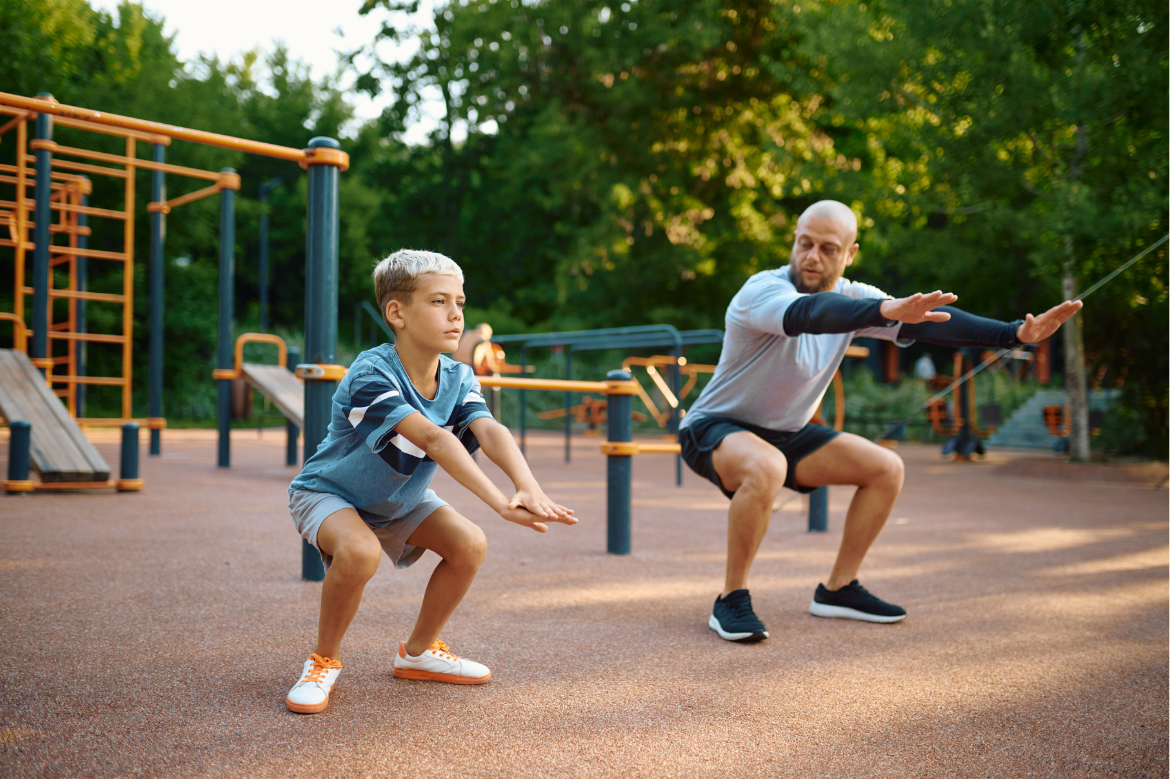
    1. Squats

    Squats are great for strengthening your legs, glutes, and core. Plus, they’re functional—meaning they help you with daily tasks, like picking up toys or lifting your little one.

    1. Stand with your feet shoulder-width apart.
    2. Lower down as if you’re sitting in a chair, keeping your knees behind your toes.
    3. Push through your heels to return to standing.
    4. Repeat for 10-15 reps.

    Pro tip: If you’re holding your baby, keep them close to your chest for added resistance.

    2. Push-Ups

    Push-ups target your chest, shoulders, and arms. They’re a classic exercise that you can modify based on your fitness level.

    1. Start in a plank position, with your hands directly under your shoulders.
    2. Lower your body until your chest nearly touches the floor.
    3. Push back up to the starting position.
    4. Aim for 8-12 reps.

    Modification: If regular push-ups are too challenging, drop to your knees to make them easier.

    3. Lunges

    Lunges are excellent for building lower body strength and improving balance. You can do them anywhere, even while holding your baby.

    1. Stand with your feet hip-width apart.
    2. Step forward with one leg, lowering your body until your front knee is at a 90-degree angle.
    3. Push through your front heel to return to the starting position.
    4. Repeat on the other leg and aim for 10 reps per side.

    4. Plank

    The plank is a powerful core exercise that targets your abs, back, and shoulders. It helps improve stability, which is handy for all those tasks that require you to bend, lift, and carry.

    1. Start in a forearm plank position, with your elbows directly under your shoulders.
    2. Keep your body in a straight line from head to heels.
    3. Hold for 20-30 seconds, gradually increasing as you get stronger.

    5. Glute Bridges

    Glute bridges are perfect for strengthening your glutes and lower back, areas that are often neglected but essential for everyday movements.

    1. Lie on your back with your knees bent and feet flat on the floor, hip-width apart.
    2. Lift your hips towards the ceiling, squeezing your glutes at the top.
    3. Lower back down and repeat for 12-15 reps.

    Bonus: This exercise can be done with your baby on your stomach for added resistance!

    Involve Your Baby (And Have Fun)

    If finding time alone is tricky, get your baby involved. Use their weight for resistance in exercises like squats, lunges, and even shoulder presses. Not only will this make your workout more challenging, but it’s also a fun way to bond with your baby. You can even do tummy time together—pop into a plank while your little one works on their strength and coordination.

    Light-Hearted Tips for Staying Motivated

    Sticking to a fitness routine isn’t always easy, especially when you’re a new dad. Here are some light-hearted tips to keep you motivated:

    • Set up a reward system: Treat yourself to a coffee or a favourite snack after a week of workouts. It’s the little things that keep you going.
    • Use dad jokes as motivation: Think of it as training for the future dad joke battles you’ll have. Your kids will thank you for the cringe-worthy puns.
    • Don’t sweat the small stuff: If you miss a workout, don’t stress. Every little bit counts, and you’re still doing great.

    Resources for More Fitness Support

    If you’re looking for extra guidance, consider checking out online resources like the Australian Men’s Health Forum, which offers tips and advice on staying active. The Heart Foundation also has great information on incorporating physical activity into daily life, making it easier to prioritise your health.

    Getting fit as a new dad doesn’t have to be complicated or time-consuming. With these simple exercises, you can build strength, boost your energy, and stay active without leaving the house. Remember, staying fit isn’t just about looking good; it’s about feeling good and being ready to tackle all that fatherhood throws your way. So grab a mat, a water bottle, and maybe even your little one, and get started today.

  • Prioritizing Your Mental Health as a Father

    Prioritizing Your Mental Health as a Father

    Prioritizing Your Mental Health as a Father

    Let’s face it, fellas—being a dad is one of the most rewarding jobs out there, but it can also be one of the toughest. We live in a society where men are often expected to be stoic, tough, and silent, even when things get hard. But ignoring our mental health can lead to serious consequences. According to the Australian Bureau of Statistics (ABS), men are three times more likely to die by suicide than women. Feelings of isolation, a lack of community, and an inability to discuss personal struggles can contribute to these alarming numbers. It’s clear that blokes across Australia are struggling, but it doesn’t have to be this way.

    Why Men Need to Break Free from Stoicism

    Stoicism has its place—it’s all well and good to keep calm under pressure or to avoid making a big fuss over spilled milk. But constantly bottling up emotions can be dangerous. When we pretend we’re fine even when we’re not, we’re only making things worse for ourselves and those around us. Our mates, partners, and kids deserve the best version of us, and that means being honest when we’re feeling low.

    Light-Hearted Tips for Taking Care of Your Mental Health

    Taking care of your mental health doesn’t have to be heavy or complicated. Sometimes, it’s just about finding a bit of time for yourself, having a laugh, and reaching out to someone when you need it. Here are some simple tips for looking after yourself:

    • Talk to a mate: You don’t have to spill your deepest secrets, but having a yarn over a cuppa or a cold one can make a world of difference.
    • Get moving: Physical activity is a great way to lift your spirits. Go for a jog, hit the gym, or kick the footy around with your kids. Exercise releases endorphins that can improve your mood.
    • Spend time in nature: Whether it’s a walk along the beach or a bushwalk, getting outside can be incredibly refreshing.
    • Don’t be afraid to seek help: Lifeline Australia, MensLine, and Beyond Blue offer resources and support if you’re feeling stuck. It’s completely free, and it can really help to talk to someone who understands.

    The Fatherhood Mental Health Checklist

    Looking after your mental health is a bit like maintaining your car. Just like you wouldn’t ignore the engine light on your ute, you shouldn’t ignore signs that you’re struggling. Here’s a checklist to help keep your mental health in top condition, Aussie style.

    1. Check Your Engine (Emotions) Regularly
      Just like your car needs a regular oil check, you need to regularly check in on your emotions. Don’t ignore that “engine light” when you’re feeling stressed, sad, or angry. A quick self-check can prevent a full breakdown.
    2. Top Up Your Fluids (Stay Hydrated)
      It sounds simple, but staying hydrated can have a big impact on your mood and energy levels. Swap out a few coffees with a good old glass of water now and then.
    3. Go for a Spin (Exercise)
      If you leave a car sitting too long, it’ll eventually stop working. Your body and mind are the same. Take it for a spin with a bit of physical activity to keep things running smoothly.
    4. Book in for Regular Services (Professional Help)
      Even the most well-maintained cars need a service now and then. Don’t be afraid to seek professional help when you need it. Think of it as a tune-up to keep yourself running well.
    5. Fill Up on Fuel (Stay Connected)
      Just as a car needs fuel, we need connection to keep going. Make time for your mates, family, and community. Isolation can drain you faster than you realise, so keep those social connections strong.
    6. Mind the Warning Lights (Recognise Stressors)
      Cars come with warning lights for a reason. If you notice signs of stress—like irritability, fatigue, or anxiety—don’t ignore them. Addressing issues early can prevent bigger problems down the road.

    Remember, Dads Deserve Maintenance Too!

    Taking care of your mental health doesn’t make you less of a man; it makes you a better one. We’re here to remind you that you don’t have to face it alone. So, let’s get to work and make mental health maintenance as normal as getting your car serviced. When we’re running on all cylinders, we can show up as the best dads, mates, and partners we can be.

    For resources, you can reach out to:

    • Beyond Blue: For resources on anxiety and depression. Visit Beyond Blue.
    • Lifeline Australia: If you need someone to talk to, call 13 11 14 or visit Lifeline.
    • MensLine Australia: They offer support specifically for men. Visit MensLine.

    So, take the time to service your mental health, keep yourself in good shape, and remember—you’re not alone on this journey!